
In May 2025, the fantasy RPG Honkai: Star Rail from HoYoverse celebrated its second anniversary. The key event of the celebration was the annual Star Symphony concert, traditionally held offline in Shanghai and accompanied by a global online broadcast. We were tasked with an ambitious goal: to give Russian fans a chance to share this experience with Chinese fans and celebrate the occasion offline. Staging our own musical show was impossible due to a limited budget, so we needed a creative, tech-driven solution.
We struck a partnership with the Cinema Park chain and adapted the concert recording into cinema screenings. At the time of negotiations, movie theatres were actively searching for new traffic sources following the impact of COVID and the drop-off in Hollywood content. As part of the deal, we secured lower ticket prices in exchange for guaranteed footfall. This allowed us to cut costs and hold 36 screenings for over 7,000 viewers across Moscow, Saint Petersburg, and Yekaterinburg.
It’s important to understand that the live broadcast of the concert from Shanghai was available for free to everyone on premiere day — May 3 — and we couldn’t simply screen the Chinese recording without adapting the content: translation and subtitling of all material (including vocal parts) and technical upscaling of the broadcast recording to suit different cinema screen formats. That’s why we scheduled the event for May 10–12. The dates were chosen to align with the May holidays, but without overlapping May 9, which would have been inappropriate.
No one could guarantee a rush: after all, the concert recording would end up online for free eventually. The crucial challenge was to build demand and a sense of exclusivity before ticket sales launched on April 10 — to transform “I can just watch it at home” into “I have to be there with everyone.”
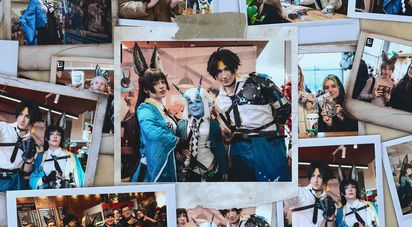
So, long before the date, we began publishing numerous posts describing the event. We talked about the upcoming entertainment programme, the cosplayers, and the prize draws for attendees. To boost the perceived value, we added collectible gifts to every ticket that could only be picked up on-site. The special screening even guaranteed a full merch set identical to what was handed out to viewers at the premiere in China.
The project budget didn’t allow for large-scale media support, so we bet on targeted community work and organic spread. The brand’s official social channels became our home base — that’s where we ran the warm-up, published teasers, and kept the audience engaged. In parallel, we built relationships with opinion leaders and loyal content creators: we offered them exclusive access to information, merch for giveaways, and a chance to become part of the event.
For ticket sales, we ditched standard ticketing operators and developed our own solution, which paid for itself through saved commission fees. But the main driver was the need for full control over the process. We built a landing page and a dedicated sales service with a built-in CRM that solved the project’s tasks: fighting scalpers, collecting passport data, and managing gift inventory.
The mechanic allowed up to 3 tickets per person (so groups of friends could sit together), but required unique passport data for each viewer. If a duplicate data error occurred, the system didn’t kill the session; instead, it allowed the user to adjust the order composition within 15 minutes while keeping the seats reserved. This minimised the risk of users losing tickets at peak load, but returned the ticket to sale if the purchase was abandoned.
When the countdown timer on the landing page hit zero on April 10 at 12:00 and the button to proceed to the purchase site unlocked, the system registered a peak load: over 300,000 page views at that moment and more than 10,000 unique users simultaneously trying to place an order. Tickets for all special screenings sold out in 3 minutes. It wasn’t just a statistic; it was a snapshot of interest we had cultivated from scratch. Each of those people didn’t show up by accident — they came because we convinced them this ticket was worth fighting for.
To manage entry checks, we created a web app. It scanned the QR code, instantly verified the date and time of the session, displayed passport data (stored in a secure environment) for verification, and automatically logged the fact that the gift set had been handed out. This allowed a full auditorium to pass through the checkpoint in 15–20 minutes, without queues or mistakes in reward distribution.
After the screening, viewers could leave feedback via a QR code, so we know for a fact that 60% rated the event very positively, 35% were satisfied, 3% felt neutral about the experience, and only 2% of all viewers gave the organisation a poor rating.
Events tied to the second anniversary took place all over the world — in Germany, France, Japan, South Korea, Thailand, Vietnam, Indonesia, America and other countries — but according to the global reporting, HoYoverse highly praised the organisation of the event specifically in Russia, highlighting the project’s strong results in ticket sell-out speed and community engagement levels.